

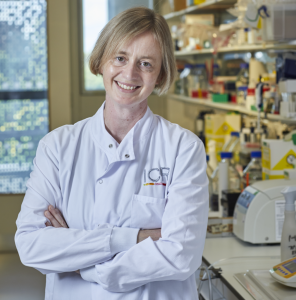
Dr Sally George
Institute of Cancer Research
Awarded: £93,994
The challenge
Some sarcomas, including rhabdomyosarcoma (RMS) and malignant peripheral nerve sheath tumours (MPNST), can develop because of changes in a gene called NF1. These cancers are difficult to treat and often affect children, teenagers and young adults. Current treatments don’t always work well, and new options are urgently needed.
How will this project tackle this challenge?
MEK inhibitors are a type of drug that are sometimes used in cancers with changes in the NF1 gene. This study will test whether combining MEK inhibitors with other targeted drugs could offer a better treatment approach for sarcomas with NF1 mutations. In models of other cancers with NF1 changes, this combination has already shown promising effects.
To explore this, researchers will use laboratory models of RMS and MPNST to:
- See how NF1 mutations change the behaviour of cancer cells.
- Test several MEK inhibitors in combination with other drugs to find the best combination.
- Understand whether the treatment would be safe and effective for people who inherit an NF1 mutation (meaning every cell in their body carries it), as well as for those whose NF1 mutation appears only in the tumour.
What this means for people affected by sarcoma
This research could identify a new, more targeted treatment option for young people with RMS or MPNST linked to NF1. If the drug combinations look promising, they could move towards clinical trials and eventually provide more effective and less harsh treatments for patients who urgently need better options.