


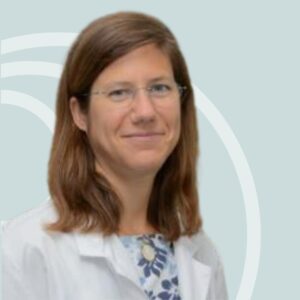
Dr Sophie Postel-Vinay
University College London
Awarded: £74,949
The challenge
Osteosarcoma is the most common bone cancer, mostly affecting children and young adults. Treatment is very intensive, including chemotherapy and surgery, and long-term side effects can severely impact quality of life. We urgently need treatments that are more effective against this type of cancer and kinder to people undergoing treatment. Like other cancers, osteosarcoma happens when there are changes (called mutations) in the DNA inside cells. In osteosarcoma, the DNA is especially unstable – constantly breaking and rearranging as the tumour grows. This makes tumours more aggressive and harder to treat.
How will this project tackle this challenge?
Dr Sophie Postel-Vinay and her team at University College London will test a potential new target for osteosarcoma treatment, a molecule called “M1”. The team recently found that breast cancer cells with unstable DNA rely on M1 to survive, and blocking M1 destroyed them. The team wants to investigate if this strategy also kills osteosarcoma cells.
The team will use osteosarcoma cell lines and cells taken from people with osteosarcoma (in collaboration with Dr Cottone) to investigate whether cell death occurs, and if this is mainly due to increased DNA damage or because the immune system is triggered.
What this means for people affected by sarcoma
If osteosarcoma cells are dependent on M1, it could open up a new way to treat this cancer – by targeting M1 specifically. In the longer term, combining M1-targeted treatments with other approaches could lead to therapies that are both more effective and kinder for the children and young people affected by osteosarcoma.