


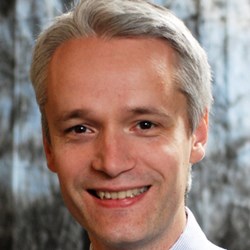
Professor Robin Jones
The Royal Marsden
The challenge
Uterine leiomyosarcoma (uLMS) is a rare and aggressive sarcoma that affects around 300 people in the UK each year. For people whose cancer is found before it has spread, surgery is currently the standard treatment. However, despite successful surgery, the cancer returns in around 50–60% of cases.
We need to find better ways to identify which patients are at the highest risk of their cancer coming back and if they might benefit from additional treatment.
How will this project tackle this challenge?
This project will support Professor Robin Jones and his team in setting up the UK arm of the L-UteCIN clinical trial. This will build on an existing international study led by the UNICANCER Group in France, which is investigating whether chemotherapy after surgery can help prevent high-risk uLMS from returning. Researchers will use a genetic test called CINSARC to identify patients whose tumours are most likely to come back.
The researchers will assess whether chemotherapy after surgery helps people stay cancer-free for longer, improves overall survival, and maintains quality of life. It will also evaluate how accurately the CINSARC test predicts the risk of recurrence.
What this means for people affected by sarcoma
This trial could provide vital evidence on whether chemotherapy should become part of routine treatment for people with high-risk uLMS after surgery. It also aims to improve personalised treatment by helping doctors identify which patients are most likely to benefit from additional therapy.