

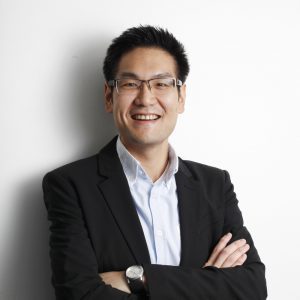
Professor Paul Huang
Institute of Cancer Research
Awarded: £200,000
The challenge
Soft tissue sarcomas (STS) are a rare type of cancer that is hard to treat. Even after treatment, around 50% of people will see their cancer come back. Researchers are working hard to develop more effective treatments. One potential approach is the use of neoadjuvant chemotherapy (NCT), chemotherapy given before surgery to shrink tumours and target microscopic cancer cells that are too small to remove.
Previous research showed that while some people’s cancer responded well to NCT, others had little improvement. Researchers think that both tumour biology and the immune system affect how well NCT works for individuals. Understanding why some tumours respond and others do not is essential to improving treatment outcomes.
How will this project tackle this challenge?
Professor Paul Huang and his team at the Institute of Cancer Research will study tumour samples from 50 sarcoma patients treated with NCT to understand why some people’s cancer responds better than others. They hope that examining different regions within each tumour – comparing areas that resist chemotherapy with areas that respond to it – will help them identify the types of immune cells and biochemical signals that control how well chemotherapy works.
Advanced imaging and computational analysis will be used to map interactions between tumour cells and immune cells, creating an integrated understanding of how NCT affects sarcomas. By combining these approaches, the project will generate a detailed “map” of treatment responses, highlighting the key biological processes that make chemotherapy more effective in some patients.
What this means for people affected by sarcoma
Understanding the factors that make treatment more or less effective for an individual may allow us to develop personalised ways of stopping tumour growth and spread. This would allow doctors to offer the best drug combinations tailored to each person’s cancer, hopefully improving survival and outcomes for everyone affected by sarcoma.
This project is our 2024 Roger Wilson Research Award, awarded to one research each year in recognition of Sarcoma UK’s founder.