


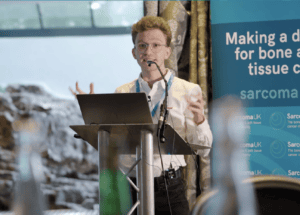
 Sarcoma UK has grown over recent years into a trusted and influential research funder, and the scale and complexity of the challenge means we must now go further.
Despite the dedication of patients, clinicians and researchers, people affected by sarcoma still face delayed diagnosis, limited treatment options and unequal access to clinical trials. Progress isn’t fast enough, and people want hope. Research is the most powerful tool we have to improve things for sarcoma patients.
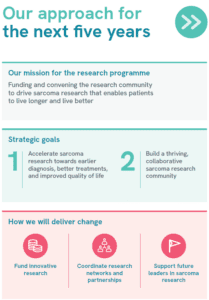
Our new research strategy, Living Longer, Living Better, sets out how we’ll change that over the next five years. It supports our wider organisational strategy, Closing the Gap, and builds on more than 15 years of funding that has driven real progress for patients. As a lean, focused funder, we’ll make deliberate choices, backing the research that matters most to people affected by sarcoma, investing in the researchers of the future, and bringing the sarcoma community together to achieve more than any of us could alone.
Above all, people affected by sarcoma will remain at the heart of everything we do.
Our research programme has funded work that has led to new discoveries and transformed outcomes for patients:
From pre-clinical research to clinical trials
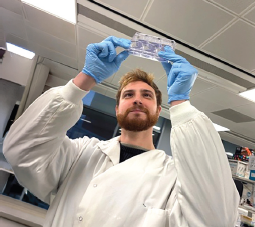
In 2012, Professor Adrienne Flanagan’s team at University College London was awarded £28,000 for research that identified a new treatment target in chordoma which led to a clinical
trial of the drug afatinib and showed improved outcomes for subsets of patients. Work is now underway to find out which patients will benefit from treatment with afatinib with the hope it can be incorporated intotreatment for chordoma.
Developing guidelines to support people during and after sarcoma treatment
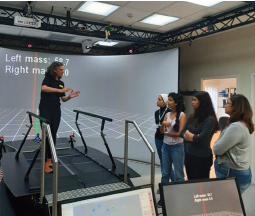 In 2016, Mr Craig Gerrand’s team at Newcastle upon Tyne NHS Foundation Trust were awarded £33,080 for research
that informed the development of the UK’s first clinical practice guidelines to support personalised rehabilitation plans for patients following surgery. The plans can be tailored according to the
treatment received, complications and individual recovery, helping to improve mobility, physical activity and people’s ability to return to everyday activities.